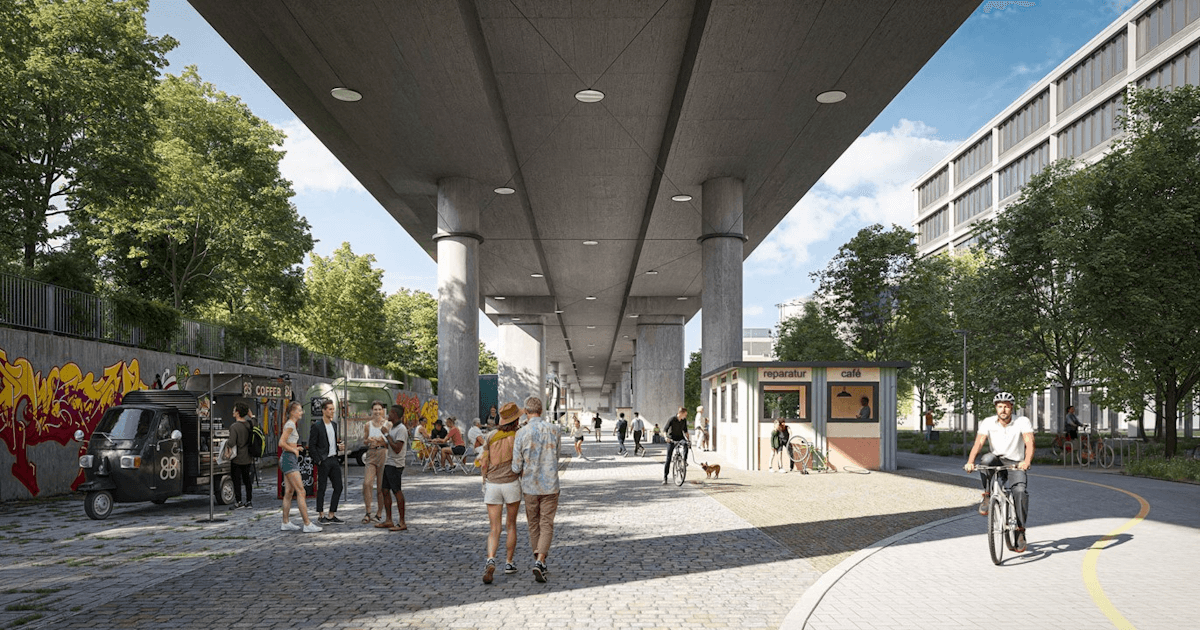


About the project
The project involved the design and verification of a reinforced concrete structural detail forming part of a larger infrastructure system.
The viaduct (built 1974–1977) consists of prestressed box girders (spans ranging from 26.5 to 38 meters) with massive prestressed cross-beams spanning the piers. These piers will be replaced in sections during construction. To do this, the viaduct is lifted using a temporary underpinning system (massive welded steel girders on scaffolding towers) and hydraulic jacks. The existing piers are unloaded and dismantled, after which new, longer piers are constructed so that the ground can be lowered.
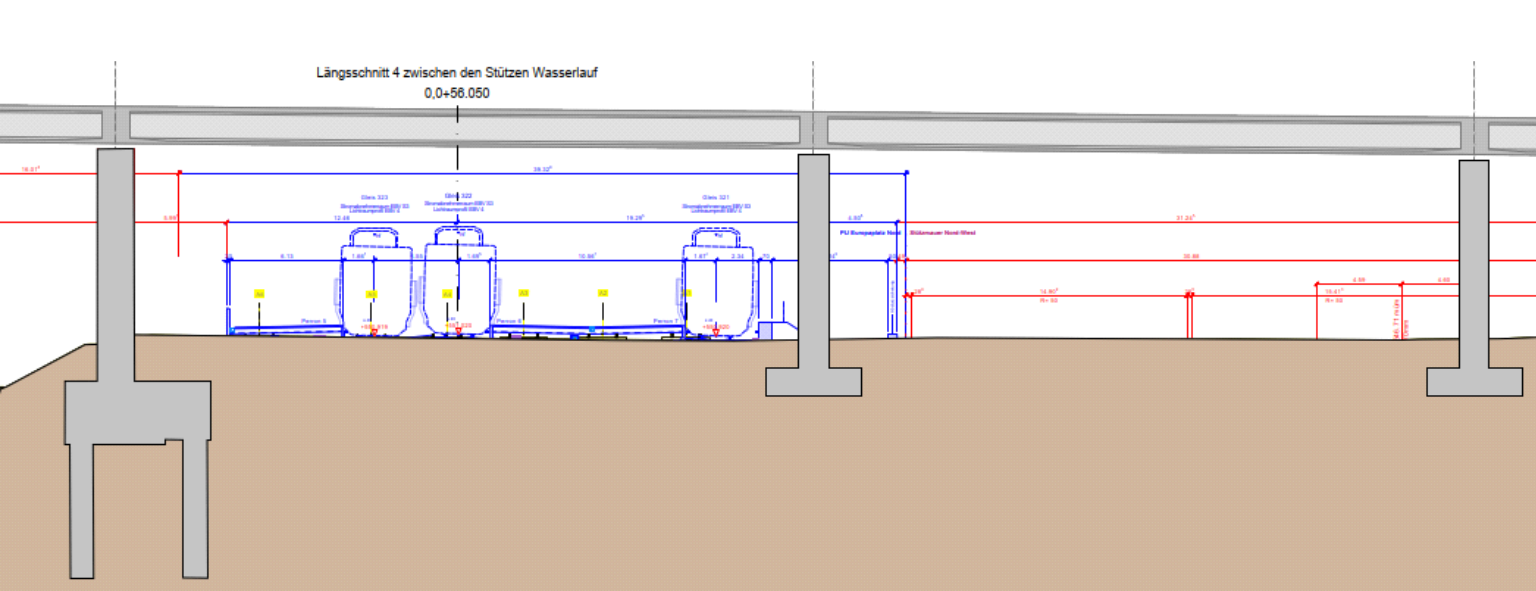
Original arrangement
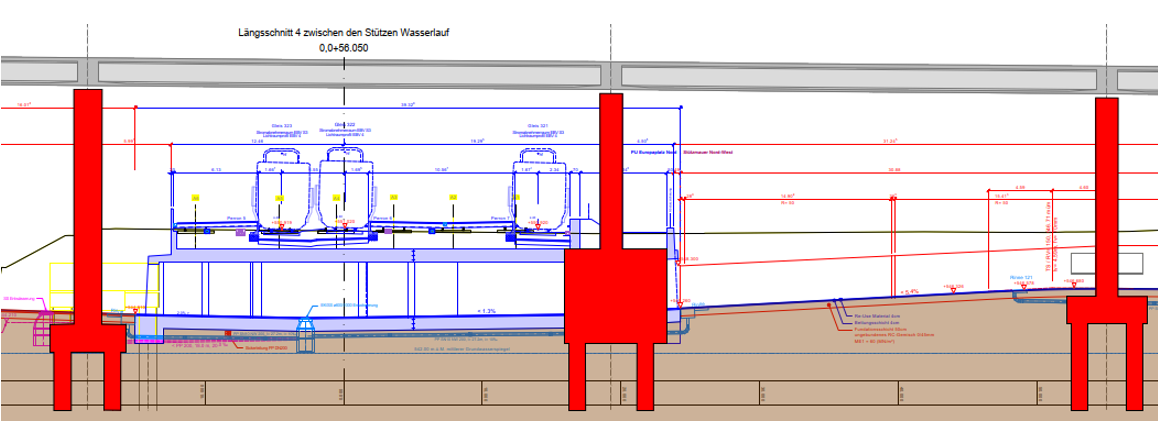
New arrangement
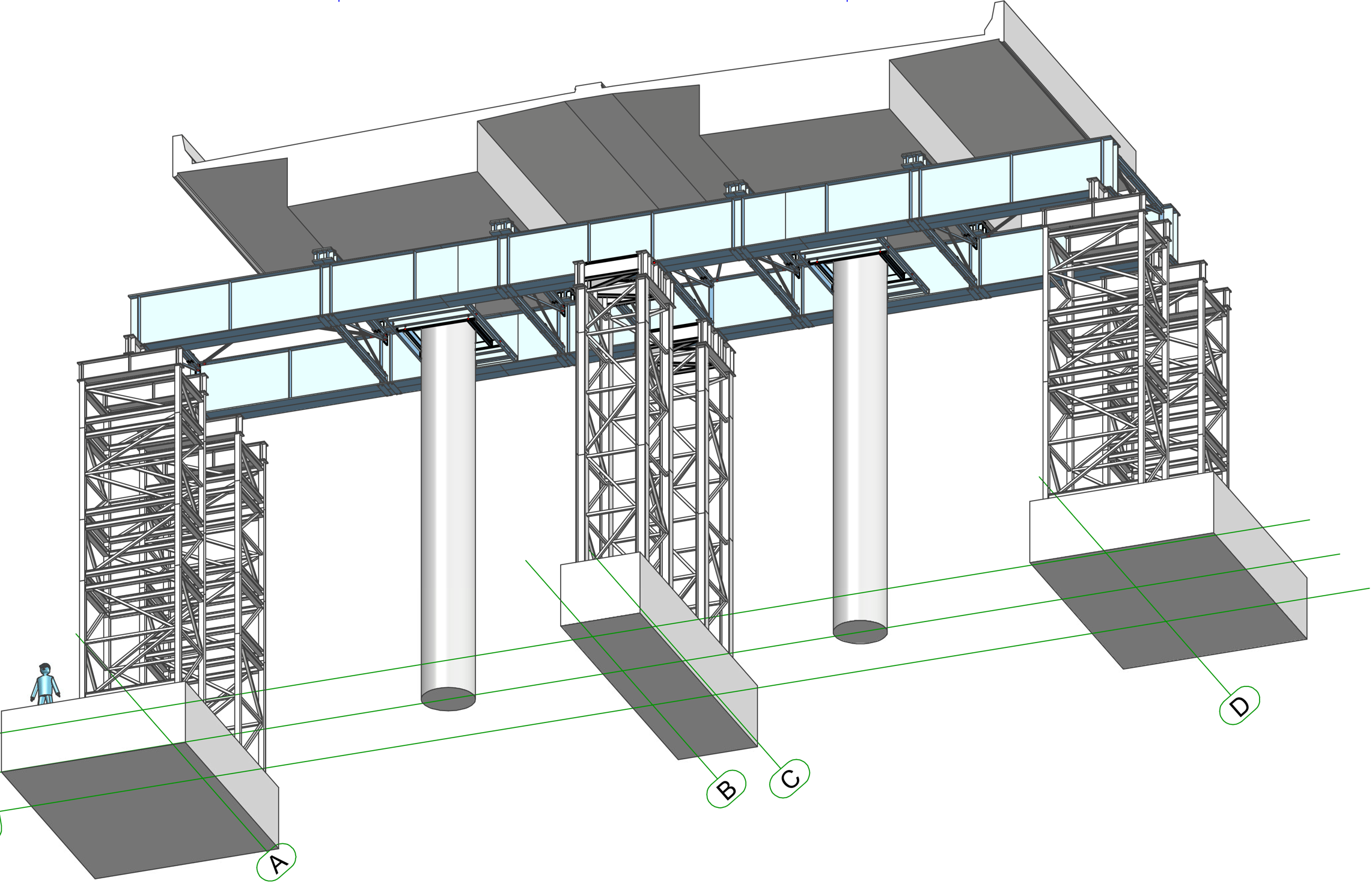
Isometric view and cross-section of the temporary underpinning (excerpt from the plan: Frutiger AG)
The structure was subjected to significant concentrated forces, leading to complex stress distributions within the concrete volume. The concrete elements were designed in accordance with Eurocode 2, with particular attention paid to:
- Local force introduction areas
- Anchorage and load transfer between structural components
- Reinforcement layout in disturbed regions (D-regions)
Due to the geometry and loading conditions, the structural behavior could not be described using simple beam theory. Instead, a strut-and-tie-based understanding of the force flow was required to ensure that both concrete compression fields and reinforcement tension ties were adequately designed.
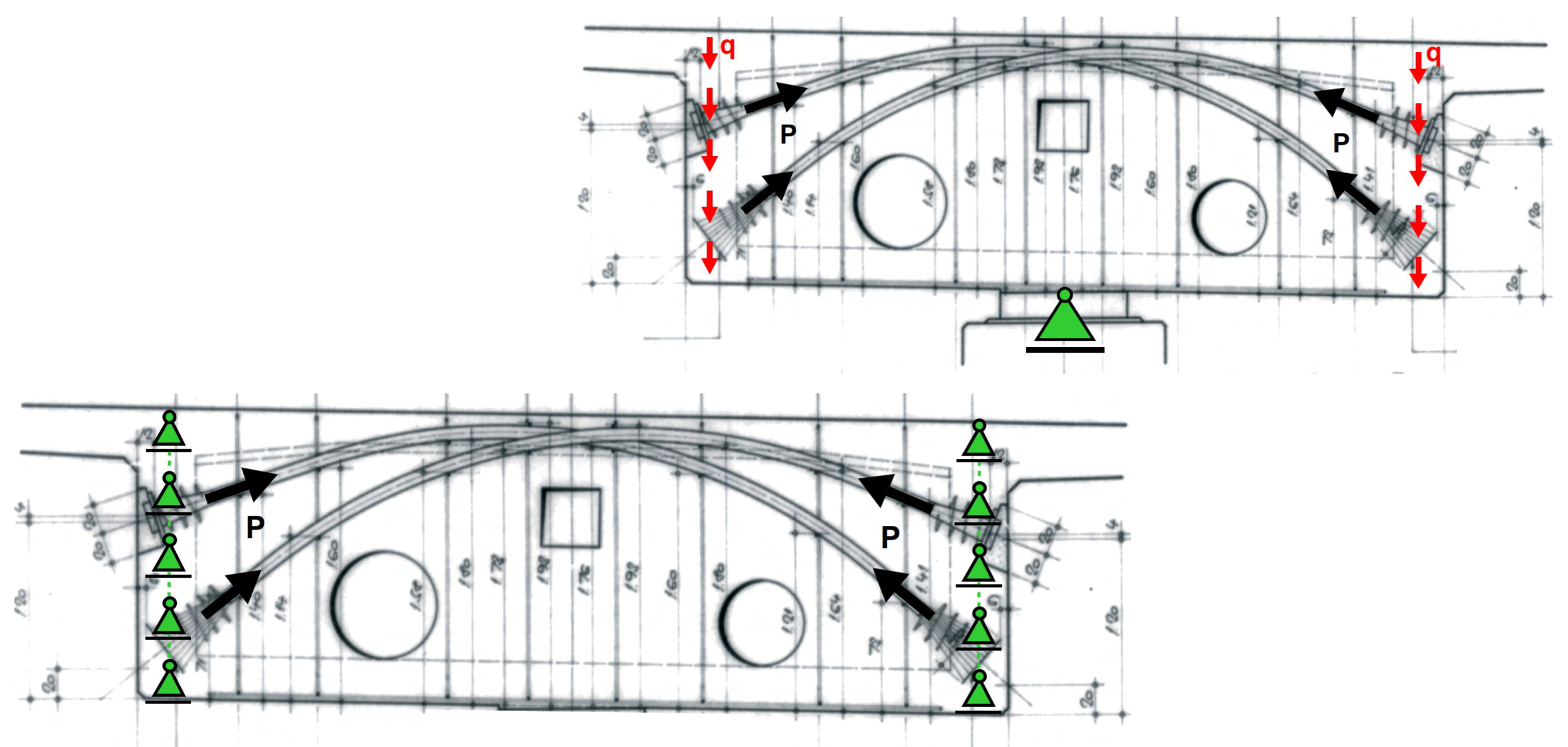
Cross-section of the bridge girder showing a comparison of force distribution in the existing structure (top) and during construction (bottom)
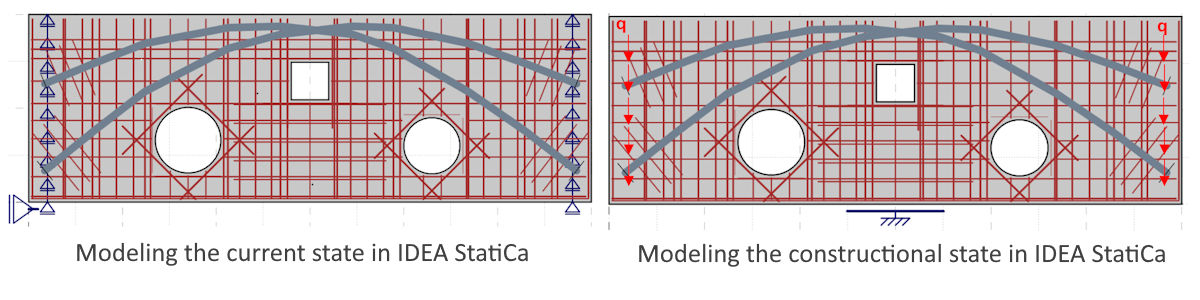
A key advantage of IDEA StatiCa was the ability to explicitly model each individual reinforcement element and directly analyze its stresses.

Victor Zahn
Project Engineer – Emch+Berger AG Bern
Switzerland
Engineering challenges
One of the main challenges of the project was the verification of complex stress states in reinforced concrete, especially in regions where:
- Forces were introduced over relatively small areas
- Multiple load paths interact within a limited concrete volume
- Reinforcement congestion posed potential constructability issues
Traditional design approaches based on simplified strut-and-tie models provided an initial conceptual understanding, but they lacked the accuracy needed for final verification. Manual development of refined strut-and-tie models would have been extremely time-consuming and prone to conservative assumptions, potentially leading to inefficient reinforcement layouts.
Another critical issue was the need to clearly demonstrate compliance with Eurocode requirements. Given the importance of the structure, the design had to be transparent, traceable, and easy for all project stakeholders to review.
Solutions and results
To overcome these challenges, EMCH+BERGER AG Bern implemented IDEA StatiCa Concrete, using the CSFM (Compatible Stress Field Method) to analyze the real behavior of the reinforced concrete detail.
The approach allowed the engineers to:
- Model the exact geometry of the concrete element
- Apply realistic load combinations directly to the model
- Define reinforcement layouts reflecting practical construction constraints
Instead of relying on idealized force paths, the finite element–based analysis provided a clear visualization of:
- Principal compressive stress trajectories in the concrete
- Utilization of individual reinforcement bars
- Crack widths and stress levels under service and ultimate limit states
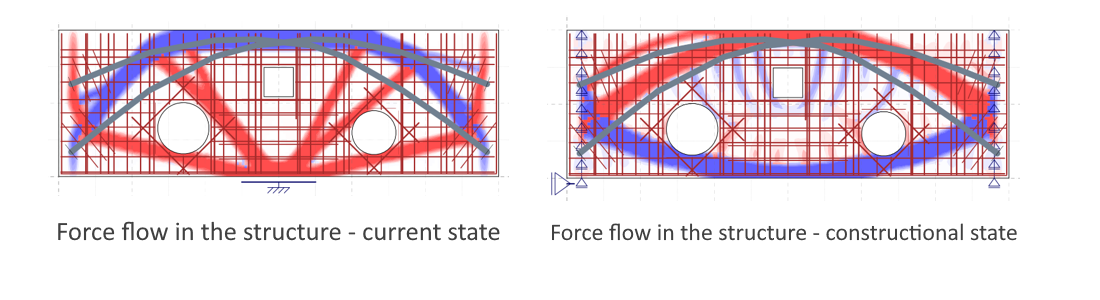
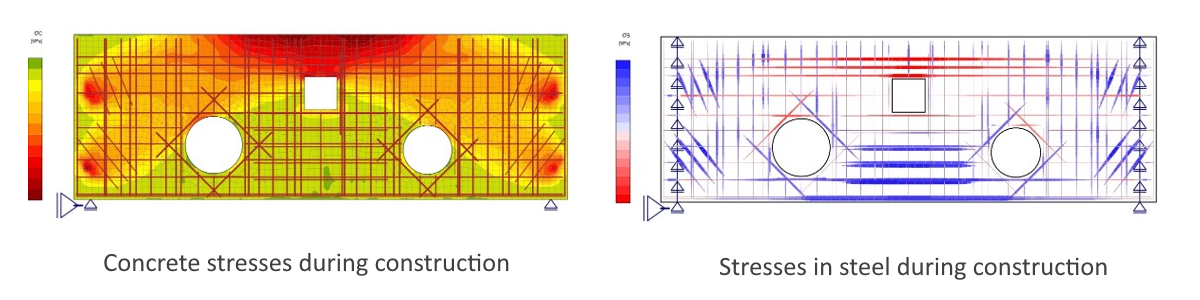
This made it possible to iteratively refine the reinforcement arrangement, achieving a design that was both structurally efficient and constructible. Critical regions could be strengthened precisely where needed, without unnecessary over-reinforcement elsewhere.
The software also generated clear and comprehensive output, including utilization checks and graphical stress representations, which significantly simplified the verification process and communication with reviewers.
Conclusion
By using IDEA StatiCa Concrete, EMCH+BERGER AG Bern was able to move beyond simplified design assumptions and base critical decisions on a realistic representation of structural behavior. The method provided confidence in the safety and performance of the concrete detail while maintaining an efficient and economical design.
This project demonstrates how advanced numerical tools can support engineers in tackling complex reinforced concrete challenges, especially in infrastructure projects where accuracy, transparency, and compliance with standards are essential.
Start your trial today and enjoy 14 days of full access and services free of charge.
Start free trial